
To date, the Earth team has invested in +150 founders as angels - across everything from enterprise SaaS, to web3 infra, to consumer fintech, to fusion reactors and debt facilities. This has been incredible for developing pattern recognition, generating deal-flow, achieving a record MOIC of +13x, and learning about a myriad of sectors.
In building Earth, however, we’re now undergoing the process of moving from an angel vehicle to a structured fund - something that requires refinement and focus, not only structurally (the joys of LPAs), but also in terms of thesis. We’re going from backing teams with our own money based on gut feel to structuring a formalised investment strategy, process, and fund structure, to become effective money managers for our LPs while continuing to generate outsized returns.
Mid last year, we started this process, beginning with our thinking on why software in climate matters, before expanding this idea into our principle of Climate Dynamism - an action-oriented approach to planet-positive investing in 2025.
This idea came from the late 2024 climate backlash - our take on planet-positive investing for the post-ESG era. Investments must look like venture-scale (+$1bn) outcomes, must have the ability to scale to this kind of return in ~10Y (see: recurring business models), and can not rely on subsidies or regulation for their growth.
Climate Dynamism has become a lens through which we assess all opportunities. This has informed our decision-making in companies like Renaissance Fusion, Minimal, Aletiq, Cariqa, a TBA (stealth) mapping proposition for the subterranean world, a TBA (stealth) SAI start-up, Hula Earth, a TBA (stealth) foundational model for weather, and a TBA (stealth) chemicals supply chain business.
As we now build a venture capital fund, our thesis has crystallised across two pillars:
🦾 Building the future of industry through digitisation, decarbonisation, and electrification
🧱 Resilience technologies and adapting our world to a rapidly changing climate
Or - to put it simply, building the world in which we want to live, while ensuring the one we live in doesn't spontaneously combust in the process 🥵.
The below areas outline our thinking in more detail, along with why these make strong pillars, companies we like in the space(s), and why we win.
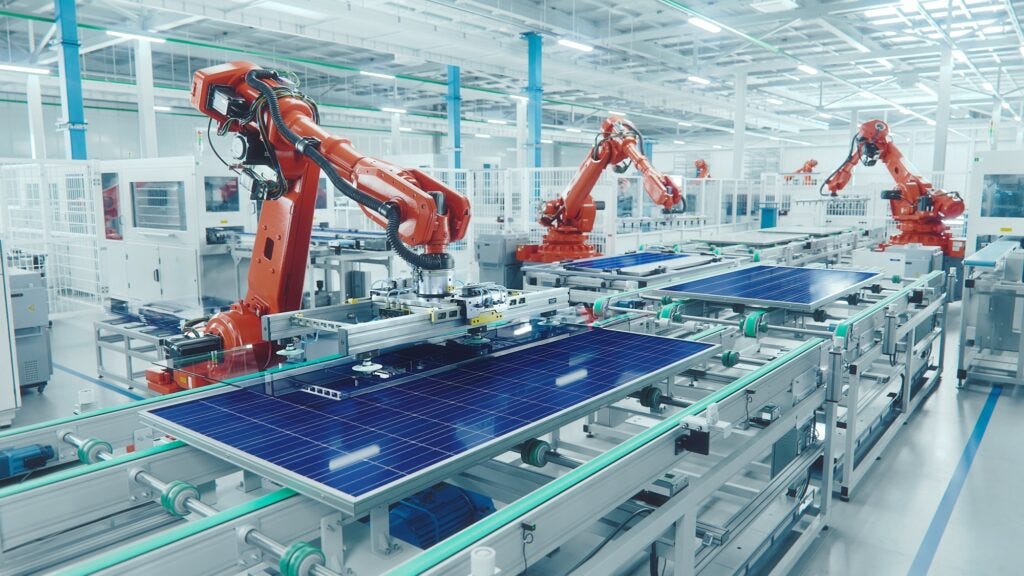
🦾 Building the future of digital-first industry through decarbonisation and electrification
Market opportunity
Manufacturing is a +$14tn market worldwide, spanning chemicals, textiles, advanced machinery, aerospace, automotive, consumer goods, electronics, life sciences etc.
The vast majority of these spaces involve legacy infrastructure and processes but are driven by concurrent needs: to create efficiencies to remain competitive, reduce costs where possible and reduce emissions (to meet regulatory requirements, ensure longevity and remain attractive to customers).
Although, as the Extantia team neatly elucidated with this post, the primary driver is (and will likely always be) cost, with all environmental considerations coming lower in the priority chain.
Political relevance
As the global political climate becomes increasingly febrile, supply chains get hit by climate shocks, and nations return to protectionism (+ mindless tariffs), the need for on-shored manufacturing, shorter supply chains and greater national independence becomes ever more important.
Layer on top of this the return of defence as a relevant global concern, and the baked in dual use nature of much of manufacturing, and the feeling is this space is set for a bumper decade.
We observe that as the marginal defensibility and differentiation of software trends towards zero, defensibility has to be found elsewhere. We firmly believe this comes through either hardware-driven solutions that create device lock-in, or through access to (or creation of) unique data-sets that exist in closed-loop processes such as physical manufacturing.
Environmental opportunity
From an environmental perspective, the manufacturing + industrials sectors account for roughly 30% of global greenhouse gas emissions. Anything that makes industry more efficient is going to positively affect this percentage.
Indicative sub-sectors
These sectors are broad and varied, and we are particularly interested in certain sub-areas within them:
Optimising manufacturing processes: AI-powered predictive maintenance, energy-efficient robotics and process control, emissions analysis, circular economy solutions. E.g. Foresight Data Machines, Ronja, AIloys
New materials design: Bio-based materials, lightweight composites, foundational models for materials design/improvement, and clean alternatives to traditional industrial inputs. E.g. Cradle, Latent Labs, Zymvol, Change Bio
Process improvement: Digital twins for process simulation, real-time process improvement using reinforcement learning, industrial IoT for real-time monitoring and optimisation. E.g. Atmospheric AI, Solve Chemistry, Carbon Re, Rectify
Industrial electrification: B2B solar, technology for PPAs, DERs, virtual power plants, fusion, energy trading tools and everything within the broader B2B electrification space. E.g. Hephaestus, Renaissance Fusion, Ionetic, Taisan, Engrate, Electricity Maps, Heuris Energy
Decentralised manufacturing: on-shoring production capabilities, countering dependence on global supply chains and leveraging novel tech for micro-factories to reduce transportation emissions and supply chain vulnerabilities. E.g. Isembard, Saeki, Pantheon
Why we’ve chosen this as a vertical
Excellent exit opportunities without the need for public markets - big pharma (Novo Nordisk, GSK, Eli Lilly etc.), manufacturing and energy majors (Siemens, GE, Bosch, VW, Airbus etc.), and heavy industry (ArcelorMittal, Ansteel, Cemex, Heidelberg, Dow Chemical, Exxon etc.) have both the budgets and the appetite to make +$1bn acquisitions, and do so frequently. This is vital in an era of reduced liquidity from public markets.
Defensible data flywheels - industrial processes are generally closed-loop, with manufacturers keen to protect data from competitors. This creates amazing opportunities for software-driven start-ups to build incredible products based on specific, proprietary data that enriches itself and allows rapid iteration cycles.
Tangible impact on both industry and the environment - tackling scope 1-3 emissions in industry is vital for the energy transition, and while many of these sectors involve “extreme whale hunting” GTM, the prizes are huge (+$1m contracts) when secured.
Playing into European strengths - Europe is an industrial powerhouse. Energy in Iberia/Nordics, manufacturing in Germany, biotech/AI in the UK, aerospace/luxury in France, agriculture in the Netherlands. These businesses will be born in Europe and then scale in the US as they grow - something we’ve done ourselves.
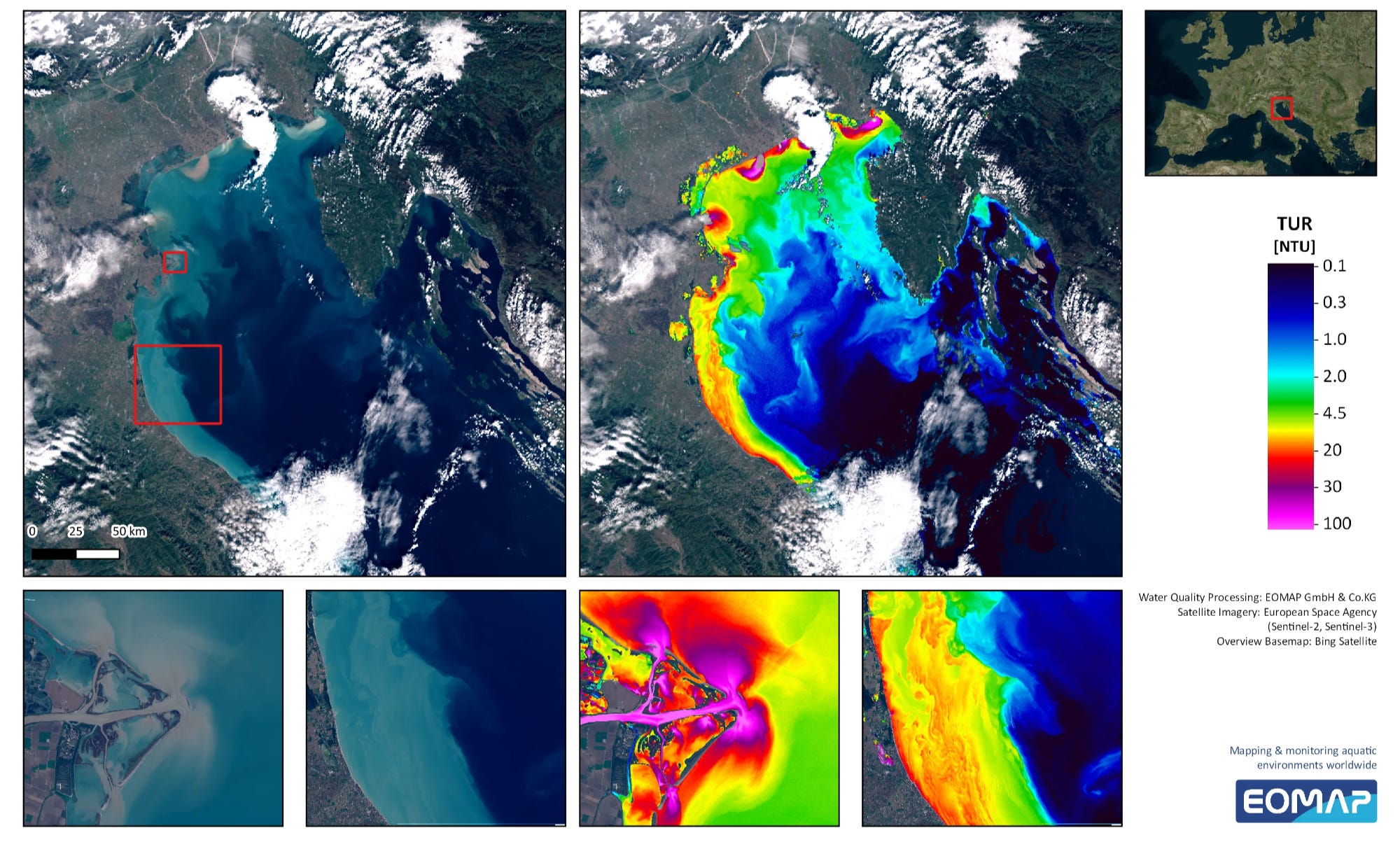
🧱 Resilience technologies and adapting to a rapidly changing climate
Market opportunity
Even with aggressive emissions reductions, we’ve sailed past 1.5 degrees - at this point, climate change is inevitable, and investing in adaptation and mitigation technologies are crucial for building resilience and minimising the impacts of a weirder, warmer, wetter world. Read this if you want to be terrified.
Climate disasters and freak weather are only getting more common - at its most conservative estimate, the Valencia floods cost €16.1bn, or 1.1% of Spain’s GDP for 2024. The California wildfires are estimated to have cost +$250bn (and counting), Spain shut down for a day, and this month the NCEI reported that the US alone had 27 +$1bn climate disasters in 2024. This was up from 13 in the 2010s, 7 in the 2000s, 6 in the 1990s and 3.3 in the 1980s.
Governments, private companies and individuals are ready to pay, because they have to - groups are rapidly waking up to the need to pay to both predict, protect against, then repair/replace following, ever-more frequent climate disasters
Indicative Sub-sectors
Climate-resilient infrastructure: new materials for building, infrastructure retrofitting and monitoring, flood/fire-resistant building materials, smart grids. E.g. , Joltsynsor, Spruce, Manhole Metrics, GreenLite
Weather prediction and geospatial analysis: longer range, higher resolution weather systems to spot disasters as they come in and better prepare for them e.g. Atmo, Jua, 2LW, askEarth, Waterplan
Novel financial products and incentives for a rapidly changing world e.g. Illyapa, Residual Carbon, ClimeFi
Geo-engineering: to buy us time while we try and sort things out, across solar radiation management, cloud seeding, ocean modification and re-wilding e.g. Make Sunsets, Stardust Solutions, Ulysses
Precision agriculture: Drought-resistant crop development, water-efficient irrigation systems, and AI-powered crop monitoring e.g. Biographica, Phytoform Labs, Gardin
Disaster response: Real-time data analysis for disaster prediction and response, monitoring tools, resilient communication networks e.g. Fire Dome, Pinepeak, Burnbot
Why we’ve chosen this as a vertical
The market fit is immediate and obvious - The Overton window has shifted, and we need to protect ourselves and short-term cool the planet as we work out how to fix it. Cynically, the worse climate disasters get, the bigger the opportunity here - but these solutions still need funding at the earliest stages to get off the ground.
Varied buyer and exit profiles - we’re uncomfortable with an over-reliance on governments as customers, but across construction, energy, water, farming, manufacturing, corporate etc., the opportunities here are exciting and varied.
Direct European relevance - Europe is leading the world on climate awareness and collaboration. While disasters and rising temperatures will disproportionately hit the global south in the immediate term, Europe’s academic prowess, combined with density of population and big-budget governments provide fertile ground for adaptation/resilience technologies.
No regulatory / subsidy dependence - it’s crazy we have to write this in 2025, but these technologies do not depend on the whims of climate-sceptic administrations. Disasters are impossible to ignore, and their effects will have to be paid for.
🥇 And why we win?
This is all well and good - but what’s our play here? Why take our money?
Well - we’ve built and exited five companies as a team, including two unicorns (Taulia, Centrifuge), and invested in over 150 start-ups in every geography you can think of.
We’re not messing around here - our angel fund has a MOIC of +13x (1x DPI), we push for access in every deal we love, and we’re always at the end of a WhatsApp for the teams we back. Beyond this:
We understand enterprise sales - we sold into the biggest big guys at Taulia (and exited to one of them - SAP!), and know what long sales cycles, complex stakeholders and procurement look like. We understand integrating into existing ERPs and persuading big organisations to change how they work. We’re not doing it for them, but we can help avoid some of the common pitfalls.
We love big bets - we’re not in it for mid-sized returns. We want binary outcomes, +$1bn or bust, and founders who were born to build this business. Our worst case scenario is a 1x - we’re not interested in anything mediocre. These spaces tend towards massive returns or nothing (unlike SaaS for SMEs). We’ve been there, we understand it, and we want to spend the next +10Y working with these people.
We’re founders backing founders - they want us involved from day one, as advisors, on their boards. We speak their language and this is different from the majority of professional investor-led European funds.
We’re pan-European with a US flavour - we have networks in the UK, Germany (+ into DACH), and Iberia as core markets, with deep expertise in San Francisco. We hope this is exciting to founders looking to scale internationally from day one.
–
Have something for us? Drop us a note.
finally someone openly adding adaption and geoengineering to their thesis - love to see it