

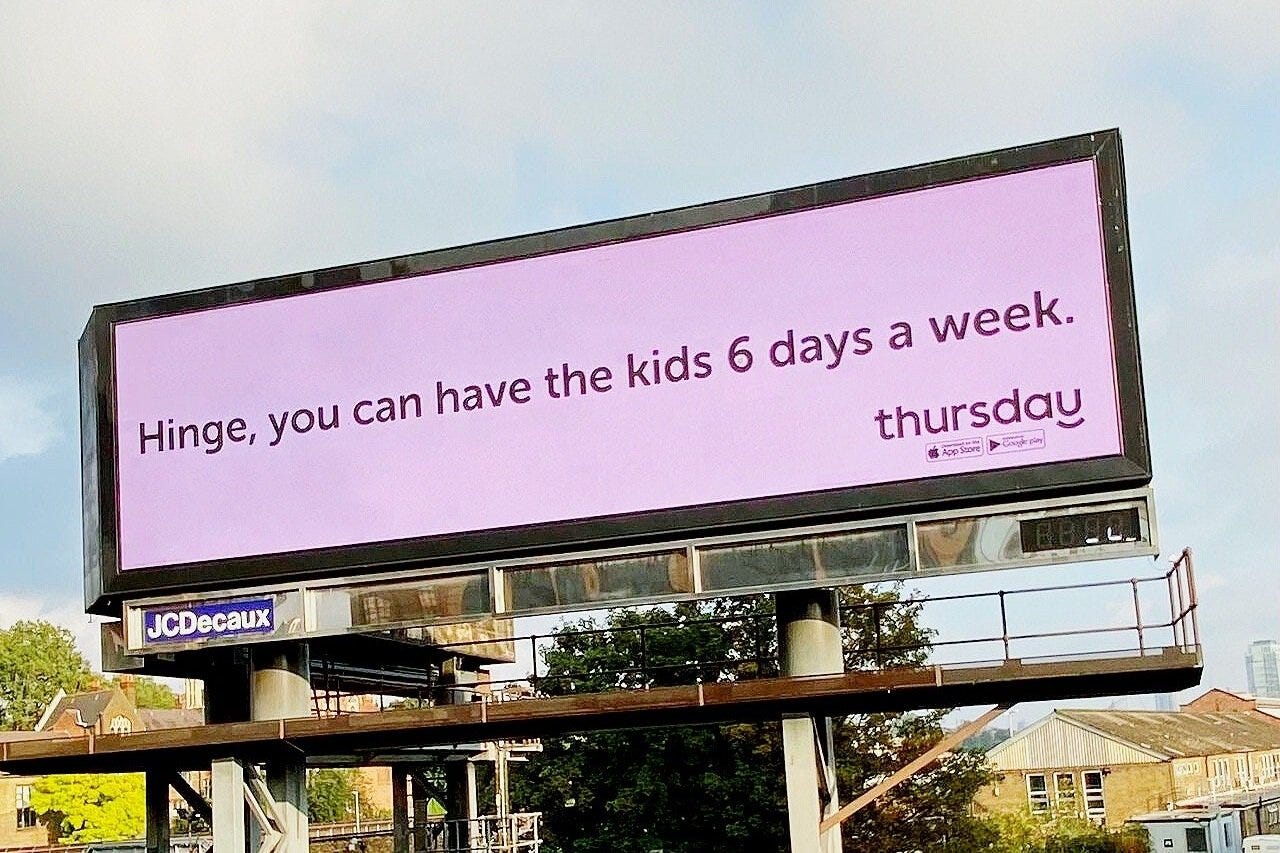
Our algorithmic overlords recently fed me a Linkedin post from Thursday, the “IRL” dating company, talking about their rapid growth, global ambitions and high level of engagement from singles across the developed world.
In light of my experience running Climate Coffee, this got me thinking about the resurgence of unstructured in-person experiences, and how it feels like the popularity of these events says something relevant about the state of the world in 2025.
tl;dr - it feels like we’re kicking back against online dislocation, loneliness, polarisation and noise, in favour of something messier, more tangible, softer, and fundamentally more human.
💏 Snogging is back 💏
Before we kick off, I remember thinking how stupid Thursday felt as an idea when it launched in late, Covid-stricken 2021. In-person dating that only happens once a week? No online pre-vetting to weed out the weirdoes? Taking on the behemoths of Hinge, Bumble and Tinder?
How wrong I was. The post last month cited launching 72 new cities with 3000 events and over 200,000 attendees in the last year (while dating apps continue to struggle) - touching on a zeitgeist that feels like a (grown-up) cousin to what we’re doing with Climate Coffee.
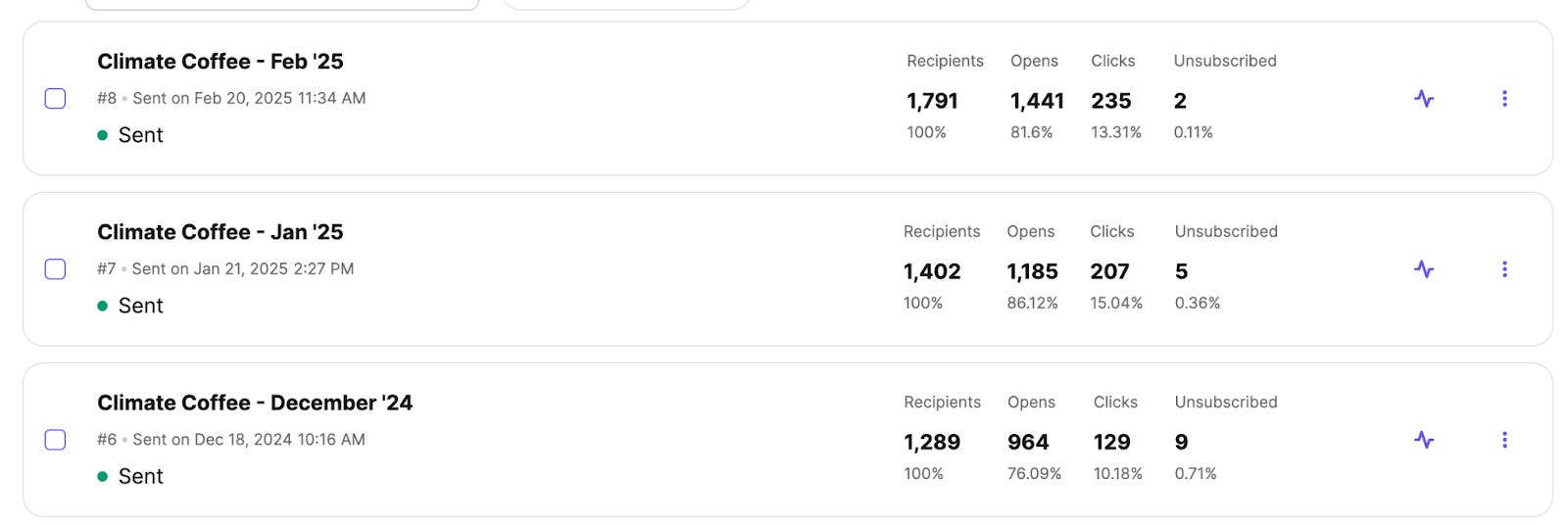
While we’re not at the hundreds of thousands (yet), Climate Coffee - a recurring monthly meet-up for people interested in climate tech - has also grown like crazy since inception. Our events focus on in-person connection. We deliberately don't have an online “community”, nor Slack/Whatsapp groups, and we communicate with our attendees as little as is humanly possible (i.e. one email per month).
We’ve spent £0 on marketing, with a core team of two (very part time) co-founders, and have grown from 30 people in a cafe in Madrid in September 2023 to over 3000 signed up “members” as of March 2025, ~750 of whom meet monthly across 11 cities in Europe and Latin America, with a bunch more locations in the pipeline.
🌊 Riding the wave 🌊
I see us as placed firmly within a macro trend of individuals craving in person experience and community.
I’m not pretending people didn't hang out pre-Covid, I’m just suggesting that we’re seeing something different in 2025 - less structured, more intentional, and (to perhaps over-intellectualise it) looking to create a sense of collective identity and belonging in an increasingly atomised world.
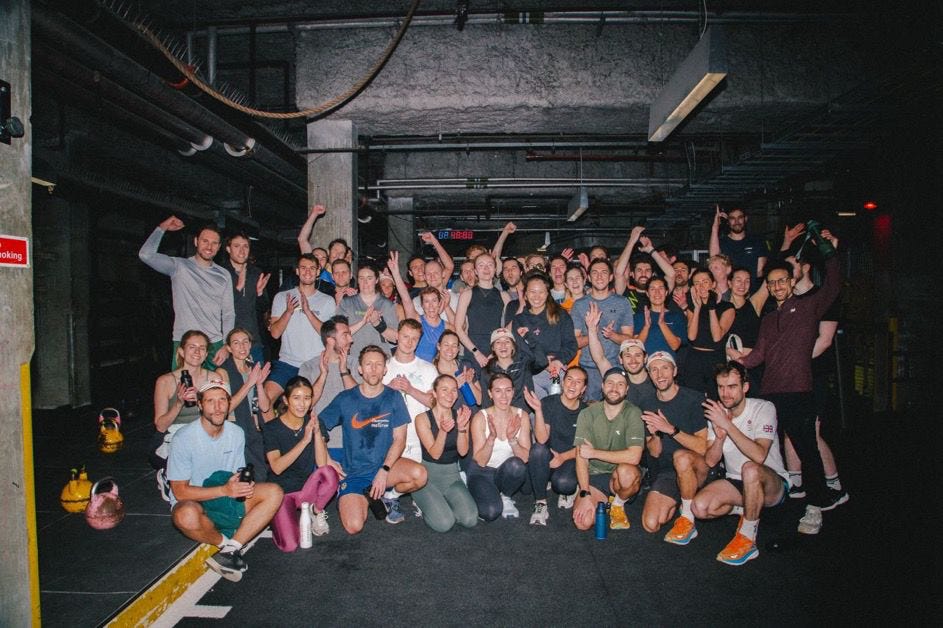
We see it with run clubs, book clubs, gardening clubs, fitness events taking over drinks-based networking, Thursday, community clean ups, and whatever the hell Hyrox is. If people are choosing to hang out with one another at Climate Coffee at 8.30AM on a -2 degree February morning in Berlin, there’s evidently a relevant desire for in person connection that deserves examination.
My thesis here is based on two core ideas that feel intertwined:
We’ve hit, and passed, peak social network
We’ve hit (and are hopefully passing) peak urban loneliness
Leading to the conclusion that people are craving something intentional yet unstructured in a highly regimented world.
🌐 Peak Social Network 🌐
From the initial social media boom of the early 2010s, the mid 2010s through to post pandemic saw the verticalisation and fragmentation of online communities.
As the general public spaces we had all joined became noisier (and more dangerous), and the business model shifted from serving us our friends to serving us ads (read: enshittification), communities splintered into sub-groups, channels, interest areas etc.
And many of us joined a myriad of Reddit threads, Slack groups, Whatsapp groups etc. for our various interests, work topics or to create digital twins of our “real” lives in person - in a way craving the intimacy real-world communities could offer whilst running from the endless sludge of ad-driven social networks (that are literally making us stupider).
Yet how many of these died almost before they got going? Unless the value exchange was super clear in an online community (e.g. I want to sell X product and Y person is there to buy it, or I’m working on a very specific problem A and there are B experts in the same group), they died pretty fast.
This trend was then accelerated by us all being Extremely Online during Covid, and by 2025, it really feels like people are exhausted with existing in social spaces online. There’s a deep longing for the world pre-notifications, where you found out about things when you saw friends, and major events were shared and shaped collectively and in real time. A more serendipitous world, if you will.
🏙️ Peak Urban Loneliness 🏙️
Which ties directly into the second pillar - that in major cities, we’ve hit peak urban structure and loneliness. Fuelled and driven by our turn inwards, towards screens and ourselves, urban environments feel even lonelier than they did 20 years ago.
Even when in a relationship or close group of friends, the fact is that our routines have become so individual, our schedules so planned, and our lives so ruthlessly dictated by the rhythms of work and seasons that we can often still feel alone.
21st century urban society largely lacks that sense of community. How many of us know our neighbours? How many people comment on how hard it is to meet new people and make new friends? And how much does this play into our increasing sense of social isolation?
🫂 Meet new people, make new friends, belong to something 🫂
We have become desirous of the serendipity, the natural connection and the belonging that come with hanging out with other people - often that we don’t know beforehand. Choosing to exist in a space with a bunch of semi strangers, with no clear agenda, has gone from the norm to a bizarrely liberating experience.
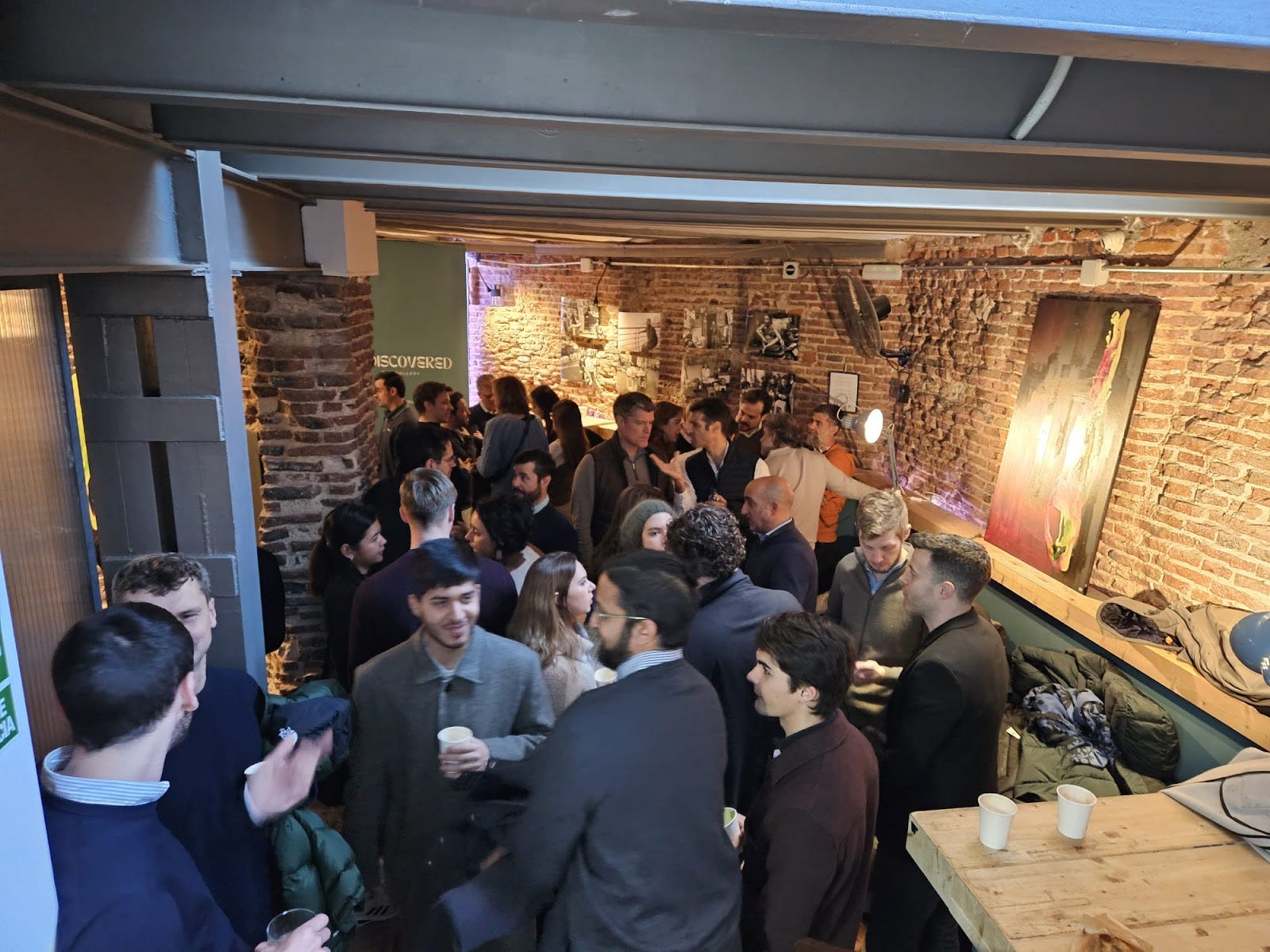
Every single Climate Coffee I’ve been to has felt the same - it’s awkward, messy, but wonderfully human. Attendees regularly comment on their love for the novelty of new faces and real conversations. And they keep coming back - because they become part of it and they begin to belong.
🛥️ Where do we go from here? 🛥️
So the question worth asking is where this desire for deliberate unstructured screen-free time goes?
As the brilliant Estia Ryan commented when we discussed this idea, “we can automate a lot of stuff, but there is also a lot we can’t automate. As we accelerate automation with AI, we’re also seeing an equally accelerating need for stuff that we can’t digitise to be even more real”.
This is a fascinating concept - just as the algorithms hyper-optimise towards sucking in our every waking second of attention, we’re pushing, in a very human way, for things that cannot be replicated through a screen or via an agent to become as “real” as possible.
Banning phones in schools is now a serious conversation, we all suddenly love clubs again, and more urban environments are consciously being planned to encourage real-world interaction.
And in a counterintuitive sense, the tech that isolates us has a vital role to play here. As we’ve lost the traditional community pillars (church, union, working man’s club, office, women’s institute etc.), tech is rebuilding those bridges in ways we didn’t expect - by providing access to kindred spirits that are now linked by strands that can only be discovered through the internet - hyper-specific sub-interest, vibe, type of experience as well as typical signifiers like gender, age or professional status.
So bring on the Thursday, Hyrox, and Park Run of this world, but also the slew of new entrants like the Breakfast, maple, The Cliq, or Groundfloor Club.
Let us make communities in new ways, offline, that unite us more than they divide.
Fail we may, but sail we must - towards our analogue digital future.

Find out more about Climate Coffee here or drop me a line at max@earth.now.
Max - I love this piece, and love your focus on the serendipity that happens when we have opportunities to connect with strangers. This is exactly what we are creating and promoting through the work of our nonprofit, Community Plate in Maine here in the US. We reimagine and reinvigorate the long American tradition of community potluck meals using storytelling as a source of connection and entertainment. I’d love to share our work with you. Https://communityplate.me
So true. This is my challenge in different apps we do.