

Investing in early stage start-ups is as strange as it is difficult. As venture investors, we make decisions based on very little evidence, often very quickly, that involve predicting returns over crazy long timeframes - then waiting for history to do its bit and hoping we’ve picked a winner.
As I see it, this there are essentially two key core skills involved in this process - (1) the need for a robust yet flexible psychological model to assess people - their motivations, their abilities, their strengths and weaknesses - and (2) a world model (often called market thesis) to understand the vision they are building towards and how this overlaps with or diverges from reality as you perceive it.
The former merits deeper examination later (and is arguably the hardest bit of the job) - here instead I’ll spend a bit of time thinking about the latter - how I think about building world models. This is an attempt to open source this thinking, so please - pull it all apart, ask questions, suggest improvements 🤗.
The first key thing to understand about these world models is that its not a one-sided exercise - you are always trying to marry your own beliefs with the imagined reality a founder presents to you.
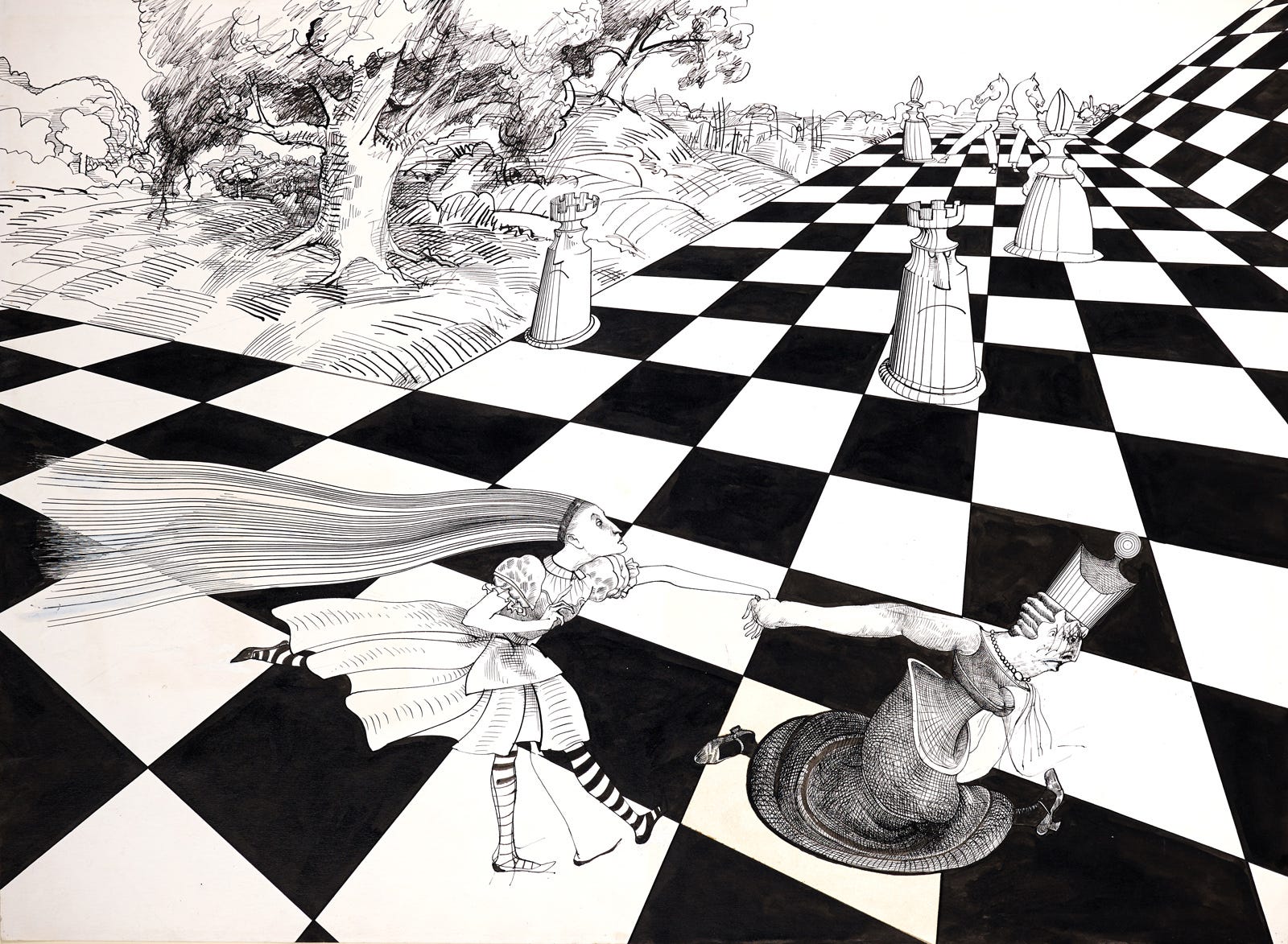
Generally an entrepreneur pitches you a dissonance in the world they live in, and suggests an alternate, better future. Like Alice Through The Looking Glass, you see into a fantastical, colourful world where things work better, cost less and make tons and tons of cash.
These realities are wonderful and addictive. Not only do they, if correct, have the potential to fundamentally alter the reality in which we live, but there is something deeply engaging about the cognitive dissonance of an entrepreneur insane enough to believe the world is wrong and they are right.
The craft of the job is then trying to assess the viability of this vision by fitting a proposed reality into the world model you already possess, to make a shape out of the two that is more beautiful and compelling than either on their own.
This is really, really hard. Not only are you constantly interrogating the vision a founder is presenting, but you’re also examining your own vision - a series of hedges based on what you think, what you know, and where your gut is leading.
I think when pressed most VCs would admit they don’t have much idea whether they’re good at the job or not, and given the long feedback cycles, the only thing we can do is tweak the inputs and see what feels good or bad.
The outputs are so opaque as to make the inputs the only bit you really have any insight into, and so these tweaks are where I spend most of my time. My life is a constant process of adapting these theses to allow me to build confidence in ideas, but also to focus on the people I’m speaking to - so I’m not trying to interrogate GANS vs. diffusion models, fusion vs. fission, or lithium vs sodium batteries live on a call, and can instead focus on the wider trends and understanding the human in front of me.
“Man cannot control the current of events. He can only float with them and steer”
- Otto Von Bismarck
Importantly, the founder will always know considerably more than you do about their sector. So you need to know enough not to look like an idiot or waste their time, but focus on the broader picture and allow them to sweat the small stuff.
For context, a few of the “models” I’ve been thinking about recently include:
Clean water is going to move from a commodity to a scarce resource in western countries. This will have profound implications in pricing, use and technological development.
The energy grid will continue to decentralise, become more complex and have a lower barrier to entry year on year, while energy prices will fall worldwide. This will open up new business models, balancing challenges, and continue the push towards an electrified economy.
Climate related disasters and temperature change will push mass migration from the global south to the global north. This will lead to political tension, polarisation, a renewed focus on defence/sovereignty, and a distrust in the migration that has powered the economies of the developed world since 1960.
Large models will commoditise to the point where value lies in the product or hardware layer - likely the latter given the ever reducing barriers to entry in software. This will mean the main limit to building software products is imagination, but will also destroy technical defensibility in almost all simple software.
Abundance will continue to be held back by planning regulation and NIMBYism excepting major geopolitical shock. Our main limiting factor on abundance will be emotional, not practical.
The fascinating questions baked into building these are of orders of magnitude and time frames. I.e., how broad should these visions be, and over what time frames. For example, the idea that “China will win the 21C” is probably too vague, while “CATL will continue as the dominant player in the battery space” is probably too specific.
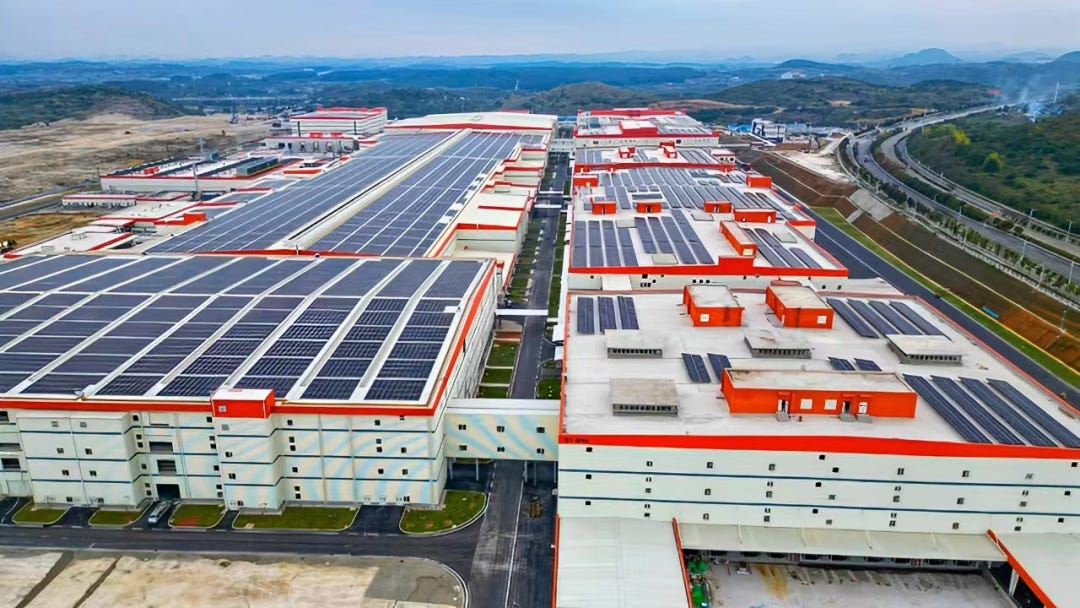
Somewhere in the middle could end up with, “Chinese manufacturing supremacy will drive even greater consolidation of most hardware development over the next 25Y. Betting against Chinese engineering R+D and execution is unwise”.
Equally, considering something on a 100Y time frame is likely unhelpfully long as we’ll be dead by then. But a 5Y view is also too short, as no business will mature in that time. So you’re trying to walk a tightrope of a middle point - sufficient temporal proximity as to be useful, but not so much that it becomes myopic or lacks context.
Consider a real world example - the much vaunted world of vibe coding. A lot of people will make a lot of money backing Replit, Cursor and Lovable - all amazing businesses, all very much of a time. But what is the correct timeframe within which to assess these companies - over 5Y, totally sensible: commoditising models + democratisation of building software = product-led explosion. But over 10Y, betting against hyper-scalers with near-unlimited distribution capacity and very deep pockets? The Anthropic vs OpenAI B2B debacle is perhaps instructive here. And longer? What will software look like in 2045, will code even be intelligible to human eyes when its both written and read by intelligent machines?
Now, I don’t have a concrete answer to these challenges - I just try and work out what feels right and stands up to my own interrogation.
People call venture a “craft” because there’s no perfect way to do it, and no two people do it in the same manner. You can’t DCF a founder’s motivations or likelihood to win at pre-seed, or indeed what industrial automation will look like in 2035. You’re making bets, and trying not to overthink or under-think the process.
And that’s what makes it so fantastically engaging and frustrating at the same time - the challenge is in working out at which level and on which vectors you want to play, but also not letting yourself get lost in the onanism of over-analysis.
All you can do is have strong beliefs held lightly enough that you are never so arrogant as to believe in the infallibility of your own world models.
I invest in climate + frontier tech stuff at Earth and Kindred Capital. UK/EU/Israel and a bit of US, pre-seed + seed. max@earth.now to get me directly.
Incredibly refreshing view on the craft of venture. Loved it!