


We (Max and Lawrence) had the pleasure of hosting a Ripple at the Drop last week in Malmo. We asked what would happen, not if but when, we got fusion.
The if question is important, but we want to do the uncomfortable work of imagining the consequences of the when.
What follows is a working theory in three acts: Year 0, Year 10, Year 30 - all with testable predictions. We hope you enjoy reading as much as we enjoyed writing - and thank you to all our Ripple participants for their thoughtful contributions.
Year 0 (2035): First of a Kind (FOAK)
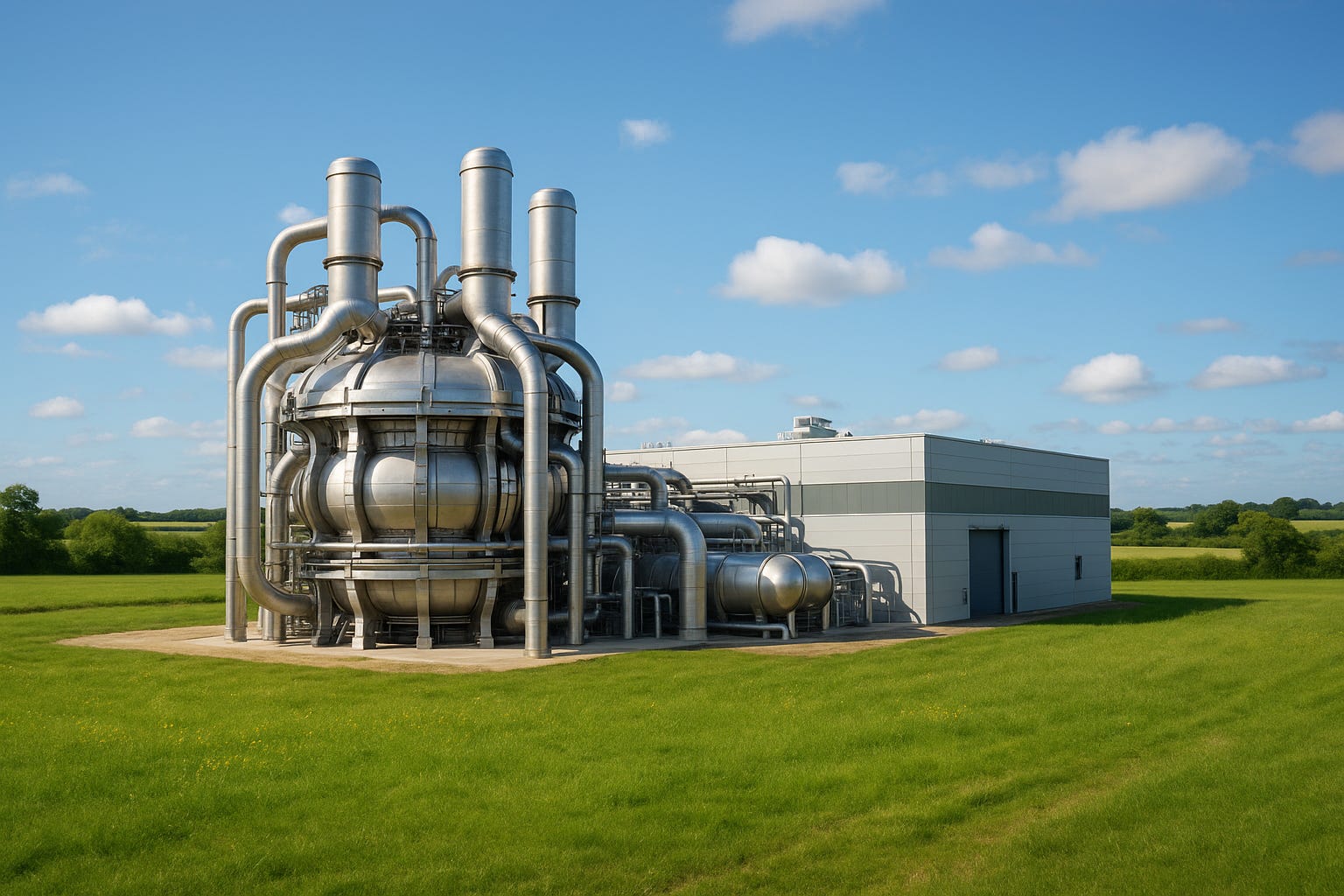
Prediction 1: By 2035, at least two grid-connected fusion plants will average ≥100 MWe net output over any continuous 90-day period.
Commercial fusion will most likely arrive with terrible economics. First-of-a-kind plants face capital intensity that dwarfs most energy technologies, with 70-80% of levelised costs from financing rather than operations.
Solar+battery systems will likely sit somewhere between $35-50/MWh at this point so we don’t expect fusion to compete on price with renewables + storage, but it doesn't need to compete everywhere. The value prop will be as base-load power with high capacity, small footprint, and flexible siting.
So expect to see the FOAK facilities in remote industrial facilities (e.g. mining - 2-4% of global energy use as of 2025), co-located with data centers requiring ultra-reliable power (potentially up to 10% of worldwide energy use by 2030) or off-grid energy resilience, and heavy manufacturing avoiding grid interconnection.
So it’s expensive, but there will be customers prepared to pay for off-grid ultra-reliable base-load. Like every technology before it (except fission, for weird contingent reasons), fusion reactors will get cheaper over time via learning curves and economies of scale. We are mapping against semiconductor adoption, where aerospace and military applications subsidised the learning curves that eventually enabled consumer electronics.
Regulatory frameworks determine whether this progression occurs quickly or slowly - and given work done 10 years earlier to clarify the regulatory differences between fusion and fission, efficient project approval is enabled. The key is to avoid fusion getting caught up in the morass of nuclear fission regulation.
In Year 0, despite the differences in categorisation, fusion plants still suffer from classic developed economy challenges - environmental red tape, NIMBYism / local disputes, planning permission admin etc. - adding years to every project. Public acceptance matters less than permitting speed, though clear messaging helps: no chain reaction threat, inherent stability, manageable waste streams. Perhaps this is the technology to unite left and right: clean, green and abundant.
Two strategies could accelerate deployment.
Repurposing decommissioned fossil fuel sites - leveraging existing infrastructure including transmission connections, water rights, and experienced workforces. Grid interconnection represents one of the scarcest infrastructure elements in developed markets.
Building up the necessary supply chains to enable fusion that can also support adjacent industries - e.g. maximising neutron utilisation through medical isotope production, designing specialty superconductive materials also used in defence/grid power, building out the gyrotron industry across telecommunications etc.
Depending on the geopolitical drivers for fusion - either expansionist or defensive - the emerging ownership structure will combine state-backed demonstration projects, private technology platforms consolidating IP, public-private critical industries partnerships and traditional utilities managing grid integration.
Oil and gas companies will most likely enter the market aggressively - either for newly viable synthetic fuel production, to de-risk flagging oil/gas revenues, or both - leveraging their superior molecular handling capabilities and massive scale/deep pockets.
—
Year 10 (2045): Scale

Prediction 2: By 2045, more than 25 commercial fusion reactors operate worldwide, with median LCOE reaching ≤$80/MWh.
Right, we made it. We have twenty-five operating plants globally. Absolutely not evenly distributed (likely the United States, China, Europe and across the Middle East). This probably depends on which way the race to AGI goes and who moves fastest.
Depending on the geopolitics of the age, there is a plausible scenario where the Great Powers compete to build fusion reactors in less developed countries. Ostensibly to help these countries develop economically but also likely to tie these countries more closely to the West or East with debt / access to outputs.
At $80/MWh, fusion is still premium while remaining competitive with dispatch-able technologies, though still above renewables plus storage. This positioning proves advantageous as electricity systems evolve around variable renewable penetration and distributed generation. Solar dominates daytime generation, wind provides seasonal variation, batteries handle short-duration balancing, but extended weather-driven shortfalls create substantial value for reliable dispatch-able capacity. Fusion fills this role with 90%+ capacity factors - the new base-load back-up for the developed world.
Supply chain development and learning curves compound these advantages. High-temperature superconductors transition from specialty materials to manufactured commodities. Skilled labour pools expand through targeted training. Capital costs decline as the technology graduates from venture backing to infrastructure financing. If the lessons of fission are learned, modularisation reduces customisation costs while maintaining flexibility.
These developments reshape industrial patterns around reliable power in previously constrained locations. Manufacturing returns to areas with poor renewable resources but excellent transportation links. Coastal desalination scales dramatically. Direct air capture transitions from demonstration to commercial operations. Climate change can be mitigated at large through cap-ex not political or consumer will.
The transformation extends beyond traditional electricity applications. Data centre growth (compute factories) accelerates as energy constraints lift. If scaling laws persist, AGI becomes something attainable as the energy-driven limits on compute begin to disappear. Advanced manufacturing becomes viable in high-labour-cost countries as energy-intensive automation eliminates wage differentials.
Politics begins to shift - countries that have moved quickly, removing red tape and building rapidly, become energy exporters. As this technology matures, the classic correlation between GDP/economic might and population size begin to uncouple - energy abundance is distributed unevenly. Countries with large excess space and strong supply links (Spain, Poland, Canada, Middle East etc.) see the benefits before others.
Domestically, questions begin to be posed - what do production and consumption look like in a post scarcity world. Those holding the means of production see hypergrowth-driven inflation but also exponential rise in tax receipts. Discussion of UBI or similar payouts, akin to a hugely expanded Scandinavian welfare state system, is taken seriously.
Year 30 (2055-2060): Abundance
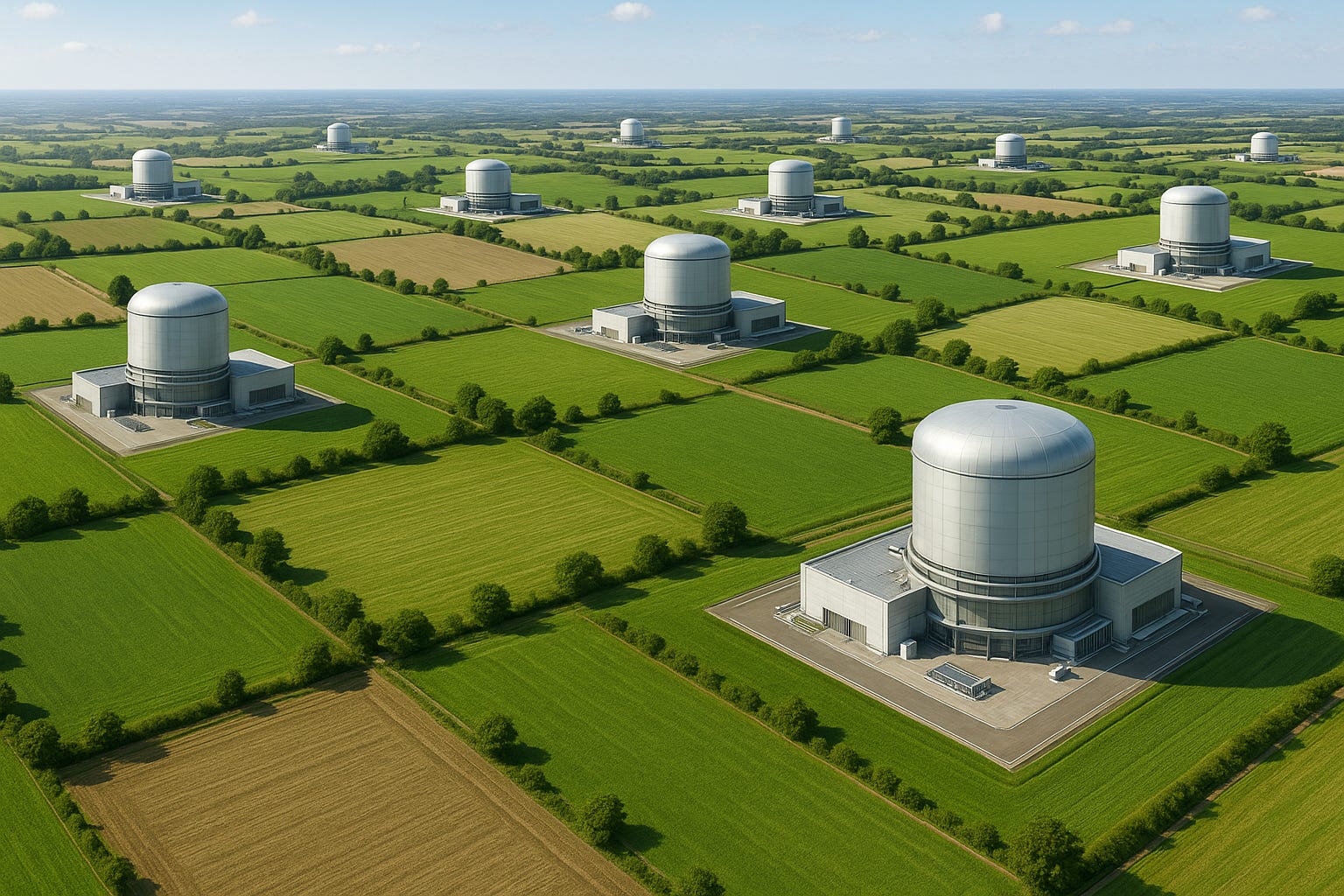
Prediction 3: By 2060, more than 250 fusion plants operate globally, with dedicated large-scale applications including gigawatt-class direct air capture and major desalination systems.
At 250 plants, fusion becomes fundamental infrastructure. Base-load energy scarcity effectively disappears in developed markets. Marginal costs for new high-energy applications drop to levels making previously uneconomical projects viable.
This abundance enables climate applications at unprecedented scale. While renewables continue providing majority electricity, fusion removes energy constraints from industrial processes requiring continuous high-temperature heat. Carbon removal becomes economically competitive at gigatonne scales, transforming atmospheric management from demonstration to systematic industrial process.
Water management transitions from energy-constrained to logistics-constrained. Coastal desalination serves populations as needed, limited by brine disposal and distribution infrastructure rather than energy availability. Questions are raised about increasing ocean salinity as this occurs at scale, but temperature driven water needs outweigh these concerns.
Industrial restructuring accelerates around new energy economics. Steel production without coking coal becomes cost-competitive through hydrogen-based processes. Ammonia synthesis relies on clean hydrogen, eliminating the largest industrial carbon source while reducing costs. Cement addresses process emissions while abundant heat eliminates energy cost pressures.
Abundant energy plus mature AI creates powerful manufacturing synergies. Automated systems operate continuously without energy constraints, enabling domestic manufacturing revival in high-cost countries and supply chain reshoring. New infrastructure is now only limited by the time taken to build - as if more energy is needed, more reactors can be built. Robotics is at a level where much of the heavy lifting can be done automatically.
Geopolitical implications intensify as resource-based power structures erode. National competitiveness correlates with institutional capacity to execute large infrastructure projects rather than natural endowments. Countries managing multiple gigawatt-scale projects simultaneously gain systematic advantages.
Conflict persists - but no longer over resources for their use. These wars look more like medieval kingdoms fighting over territory and pride than any specific need for land/materials. International bodies develop renewed purpose and vigour as governments understand the need to collaborate, manage output and deal with squabbling factions.
Economic effects become sectoral. Energy-intensive goods experience sustained cost reductions while land near transmission infrastructure, rare materials, and skilled project management command increasing premiums. Constraints shift from thermodynamic limits to institutional capacity.
As humanity approaches absolute abundance, many grand questions begin to be asked:
What does purpose mean when work is removed?
Is space the next frontier based more on curiosity than resource scarcity?
What role does the government play in an abundant society?
How rapidly can scientific discoveries be made in an era of energy and AI abundance?
How much industry can be outsourced to orbit to re-wild and settle the Earth?
As the global human population has peaked around 2060, are we entering the twilight of our species?
So, what can we do today?
Well, not much. It’s still on the scientists to solve tritium breeding, first-wall materials that survive neutron bombardment, and magnetic confinement systems that maintain stable plasma for commercial durations. But we see three things that can be done:
Messaging and political support: Unite the left and right. Economic growth for the right, and clean energy for the left. But avoid the term “nuclear” and negative connotations. Let’s drop “nuclear” and just use “fusion”.
Supply chain development for critical components should begin before commercial deployment. High-temperature superconductors, tritium breeding materials, radiation-resistant alloys, and specialised cryogenic systems need sovereign manufacturing capacity rather than dependence on potentially constrained international suppliers.
Develop policy architecture for neutron utilisation beyond electricity generation: Medical isotope production, specialty materials processing, and fission waste transmutation represent additional revenue streams that improve project economics during crucial early deployment. These markets need regulatory clarity and procurement frameworks now, not after the first plants come online.
Consider a world without limits: philosophy and debate are often underutilised in the fields of science and technology, but can prove hugely valuable in predicting the challenges of the future. Have these discussions, ask these questions, and test out hypotheses - before this future is upon us.
—
We love thinking about this stuff. Want to chat more? Ping Lawrence or Max directly.