

My wonderful colleague Leila is always on the hunt for spiky entrepreneurs. By this she doesn’t mean caustic or unpalatable, but instead entrepreneurs who exhibit spikes - personality traits, beliefs, behaviours or habits that are angular, unusual or unique.
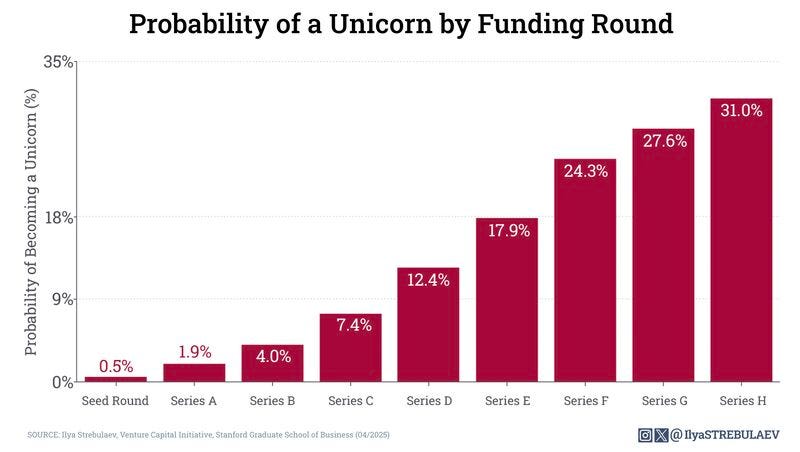
As venture investors, we’re in the business of hunting extreme outliers. Of the ~2000 start-ups backed at seed in Europe each year, ~15 will get to a $1bn valuation (and even fewer will exit for something really meaningful).
This ~0.75% of businesses will, by and large, be built by very unusual people - obsessives and zealots who not only believe the reality they perceive is fundamentally broken, but that they are the only people capable of fixing it.
Having spent time thinking about world models and frameworks for making bets on the future, I wanted to spend a bit of time digging into understanding these spiky people - who they are, how they’re different from the norm, and how I try to spot them.
A caveat here: this exercise is based on personal insight, and is by no means objective. There are 1000 shades of great entrepreneur, and anything that occupies a tiny outlier portion of a dataset is likely going to contain major variance within itself. This is just how I try and think about investing in people - something I have no idea how good I am at to start with.
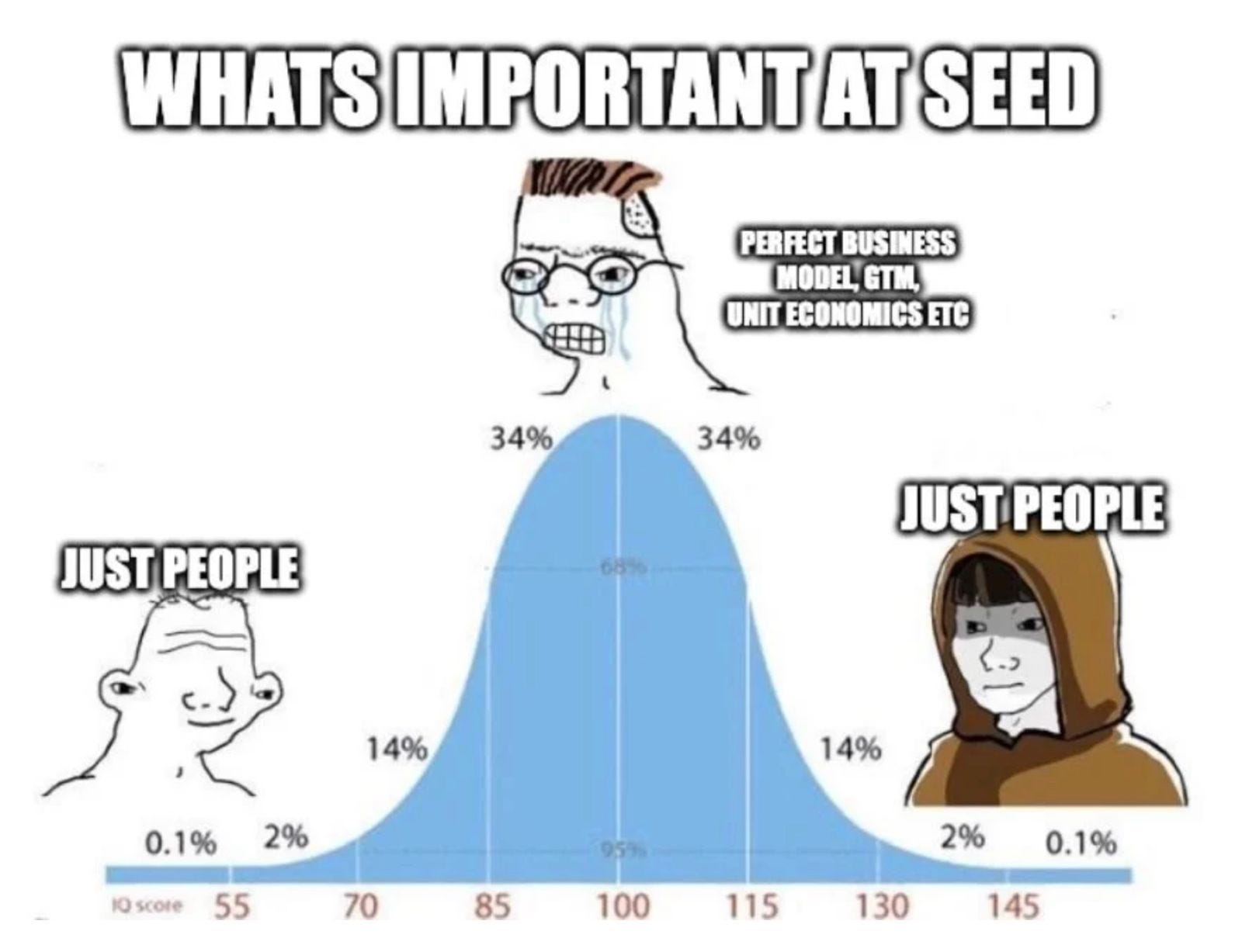
Just not giving up
The necessary (but not sufficient) condition of being an exceptional entrepreneur is resilience. Fundamentally, everything stems from not giving up - if you’re still in it, you can still win it. If you give up, nothing else matters.
Realistically, most people get bored of most problems pretty quickly, or stop when they hit resistance - solving compliance challenges, building multi-stage software, iterating on hardware prototypes, managing enterprise sales. This stuff is really hard, and more often, really dull - you need to have some insane drive to not give up when it gets difficult, or more likely, pretty boring.
One question that I find fascinating is “What’s the longest you pursued something with no external validation? How did you keep going?” - because realistically the extrinsic motivation of likes on a post or pats on the back dry up pretty fast. What remains is the inner fire to not stop.
This resilience can come from many places. Hummingbird built a (now memeified) brand on backing weird people, but the examples are there - second generation children of immigrants who’ve seen the graft required to make it in a new country (multiplied by the fact those parents were likely already outlier people for choosing to build a new life elsewhere - see here), kids who went through real adversity at a young age (like Jensen Huang’s accidental stint at a correctional school), child athletes who learned intense discipline from an early age, ex-military servicemen or endurance exercise nuts who are just wired different. It doesn’t matter where the resilience comes from, but that it manifests in an unusually high level of capacity to just not stop moving forward.
Unique obsession with a problem
Closely related to, and perhaps overlapping this is obsession with a problem or problem space.
The first start-up founder I worked for (the inimitable Will) spent over a year getting regulatory approval for a novel type of mortgage in the UK. Not only would most people never have ever considered that, the majority would have given up when they realised how many hundreds of pages of documents they’d have to read and submit.
He was so incensed by the challenges he had seen buying his own home having returned from abroad that he was willing to go through this pain barrier - a combination of obsession and resilience that allowed people to try and solve a problem previously considered impossible.
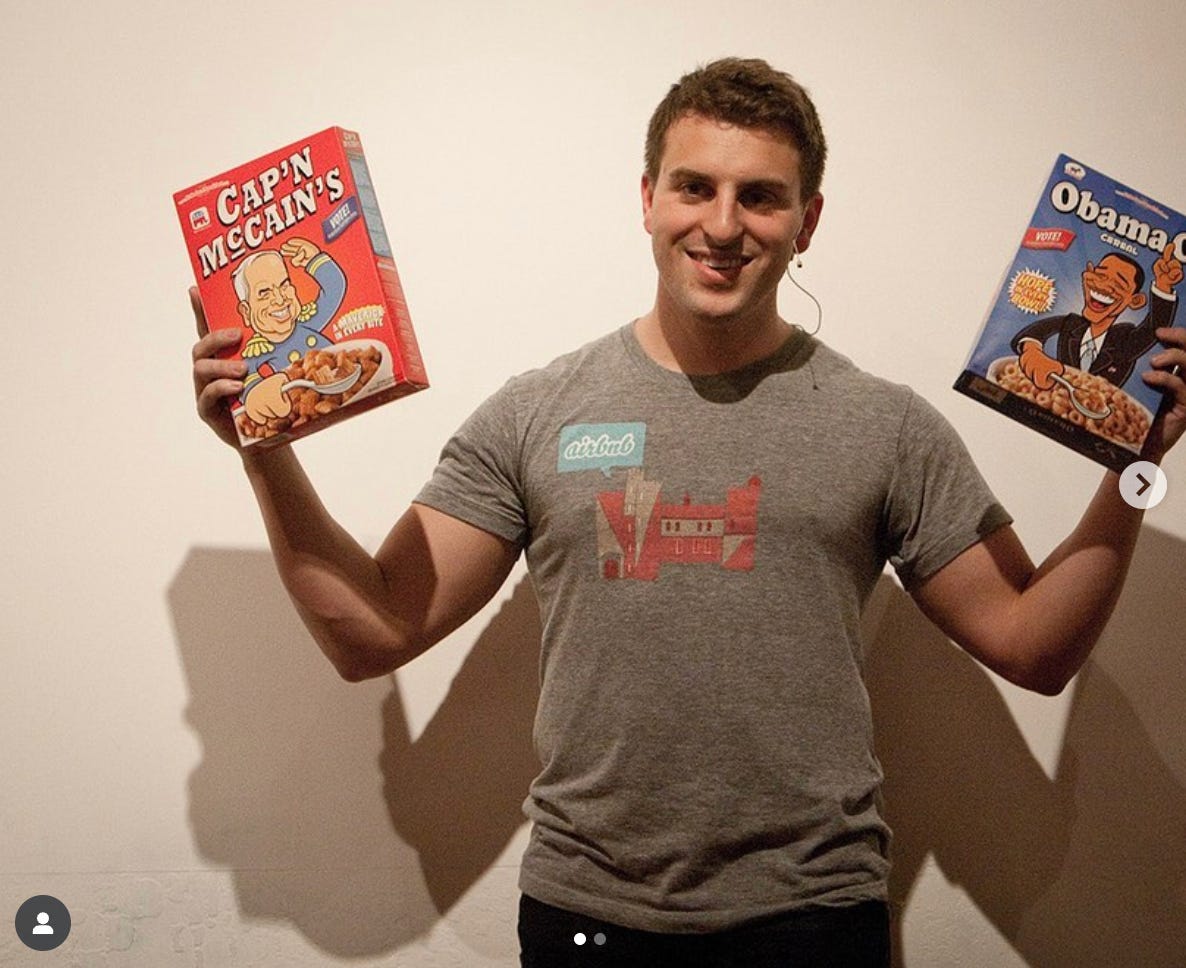
There are the vaunted stories of how this obsession manifests - the Collison brothers visiting customers in person to install Stripe directly onto their machines, the Airbnb founders designing election-focused breakfast cereals to keep funding their MVP, or the insane Steve Jobs x Jonny Ive obsession to detail. The clear pattern here is a bizarre need to solve a specific problem at a specific time, come hell or high water.

More often than not, successful obsession is customer centric - a desire to get so close to a customer base so as to understand their every need. To solve the problem they had, but also the ones they hadn’t even realised yet, This can often come from personal experience - being a hobbyist, studying part time, growing up surrounded by an issue.
This obsession also brings unique perspective into play. The difference in insight between a quick parse of a document and a deep reading can be in the orders of magnitude.
What do you believe that no one else does? Where does this come from?
To paraphrase Paul Graham, the best startup idea is a problem you noticed in your last company. The real obsessives are the ones who take that problem and go so deep on it that they have no option but to build the solution.

Strong beliefs, lightly held
There’s the adage that most start-ups don’t fail, they become zombie companies. Instead of disappearing through some dramatic event, they more likely fade into irrelevance - enough customers to keep going at some level, but not enough to grow or fund expansion.
While obsession and resilience are key - there is a very important difference between zealotry and dogmatism. The former is empowering and energising, the latter can be hugely limiting.
When entrepreneurs lack the capacity to understand the signals they are hearing from customers or the market, they often end up down rabbit holes - missing the wood from the trees.
There is always the interesting question of “what beliefs have you changed in recent months, and how did you come to that conclusions?” My partner Maex would call this coach-ability - not in the sense that he needs to go into a company and act as some kind of internal advisor, but in the sense that a founder needs to be able to see where they’re wrong, struggling or ill advised and alter their own beliefs and actions accordingly - have strong beliefs, held lightly, and course correct as appropriate.
Charismatic authority
My favourite of Max Weber’s types of authority is that of charismatic leadership. Using the example of Napoléon Bonaparte, Weber outlines this as a state where the authority of a leader derives from their personal charisma. Much as this was true for politicians or military leaders in the 19th Century, it is true for founders.
In the early days, start-ups are a really bad way to live a healthy life - long hours, high degrees of uncertainty and a really bad risk reward pay off in +90% of cases. As such, people have to be willing to go to war for you as a founder.
This doesn’t have to be cult-like obsession, but there needs to be something - a spark, a vibe, an energy that captivates people and buys them into the reality you’re building.
The intriguing part of this from the outside is how this manifests. Tom Blomfield and Nik Storonsky are both exceptional founders in the same field, yet they couldn’t be more different as people - finding the consistencies between them is the challenge.
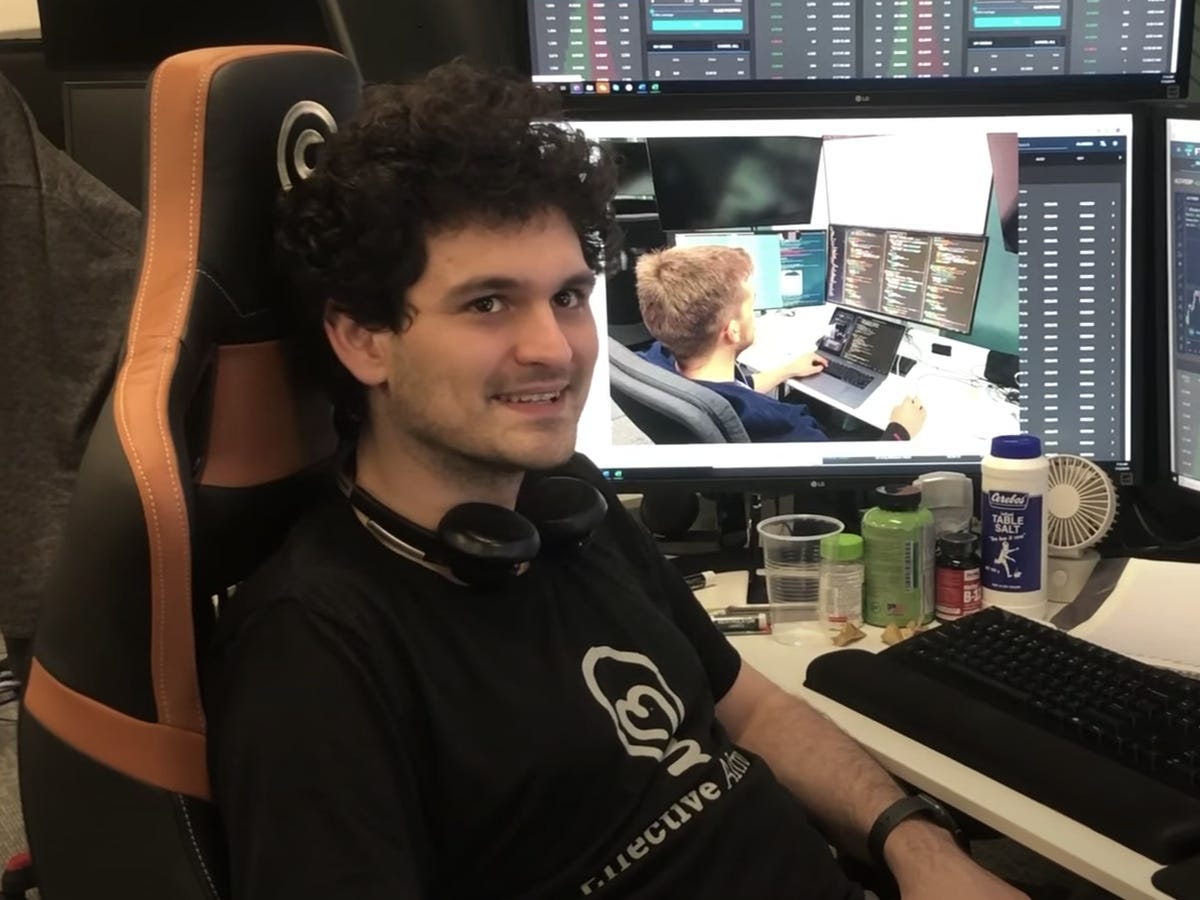
Now, this can go too far - SBF playing video games on investor calls, Adam Neumann’s ability to persuade investors that property was a venture-backable asset, or Elizabeth Holmes’ charm and duplicitousness. This in isolation is hugely dangerous (especially when markets get frothy), but a healthy dose of charisma is vital for an ability to keep attracting talent, selling stuff and raising money - arguably the three ingredients of building a successful company.
Pulling the future into the present
We often confuse small businesses for start-ups because technology adoption across the economy has made them look ever more similar - but there are key differences. These are generally desired scale and the speed of execution.
Desired scale is a helpful proxy for the founder’s ambition - not just wanting to build a great accounting firm, for example, but wanting to change how accounting works. Or not wanting to build the best propulsion engine, but wanting to build the next NASA.
Scale and impact are not always directly correlated - some things can be hugely impactful at smaller scale, or in less remunerative ways (e.g. open sourcing a product and giving it to the world for free, for $0 revenue). But for a start-up to succeed for their venture investors, a large exit (and so scale) is paramount.
And speed goes alongside this. It’s highly unlikely as a founder you’re the only person trying to solve a problem in a market - in fact more often than not, in today’s fully connected global economy, being the only one is a negative sign.
As such, time to action is vital. The best founders have an intense bias for action, and work accordingly - things get tried. Things fail quickly.
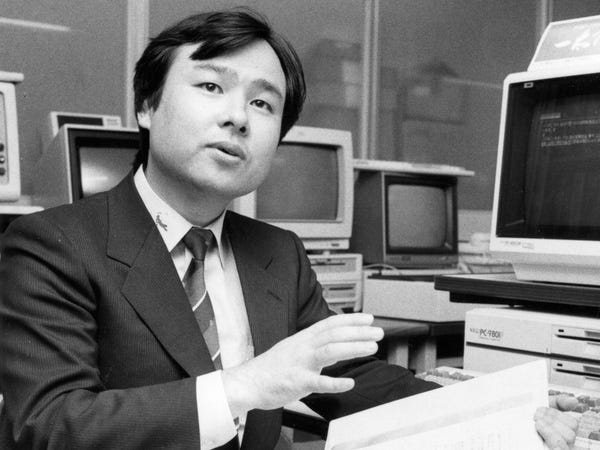
One of the analogies I like is how someone tries to pull the future into today. If a market isn’t ready, make it so - reading Gambling Man, you see Masayoshi Son’s outlier ability to both change reality for the people around him, and alter the speed at which things can progress.
Clarity of thought
And last but very much not least - the need for incredible clarity of thought. Start-ups often succeed or fail on the back of very few decisions - when to raise money, who from, which customers to prioritise etc.
These decisions are not just existential, but also often happen very quickly. The more unique individuals I’ve come across have an ability not just to focus in on the key variables, but to make these decisions rapidly, based on limited inputs.
When you don’t have enough information, how do you move forward without betting the company?
This scales up from things as small as the type of profile someone wants to hire for a key role, to whether to pursue a horizontal vs vertical sales approach. Outlier founders have a strong, gut sense of what they want, believe strongly in that decision in the moment, and act decisively.
Now, I reiterate - this is not exhaustive, nor is it scientific. Some of these areas overlap, and not all are required in every case. It is as much based on gut feel as anything, and I look forward to analysing my own decision making down the line, when many of the businesses I’ve backed come to maturity.
But in the meantime, open sourcing decision making, thinking and approach are never a bad thing. Think I’m an idiot? Let me know.
great read. thanks!